- Pathways by Enterprising Minds
- Posts
- Why “Do More With AI” Is Wearing People Down
Why “Do More With AI” Is Wearing People Down
Gallup data helps explain why productivity pressure is rising while engagement struggles. Plus 4 guardrails you can try this week.

Dave Dougherty
December 19, 2025

I was not exhausted because I was not getting enough done. I was exhausted because I was getting too much done.
When leaders communicate productivity expectations without upgrading the infrastructure, AI becomes less like empowerment and more like a silent performance standard. That is where “do more” turns into fear.
Output Inflation: When AI Lets You Produce More Than Your Brain Can Process
Last week, I hit a weird wall. I was not exhausted because I was not getting enough done. I was exhausted because I was getting too much done. AI made it easy to draft, refine, summarize, rewrite, and generate variations across multiple projects. The problem was that my brain could not keep up with what I produced. I had more “finished” work than I had time to actually think through. It felt like my output outpaced my ability to process what I had just done.
Given all the AI stories we are exposed to on LinkedIn or podcasts, about how “everyone else is using it,” it feels like these narratives hit differently depending on where you sit in the workforce.

The Productivity Narrative Splits in Two
If you are in leadership, “do more with AI” sounds like a clean path to efficiency. Higher margins. Higher revenue per employee. Faster cycle times. That story gets rewarded, so it keeps getting told.
If you are an employee, the same message can feel like a threat. You are replaceable, so you had better outproduce your peers. That fear gets amplified every time you scroll LinkedIn, listen to a podcast, or see another “I used AI to do a week of work in a day” post. The result is a quiet competition. Not to do the best work, but to look the most efficient.
And when you do not feel like you are winning that competition, it does not just create stress. It creates a specific kind of doubt. Maybe I am falling behind. Maybe I am next.
The Gallup Reality Check and Why It Matters
This is where the data helps, because it forces us to stop arguing about vibes and start looking at what is happening underneath the productivity story.
1) Engagement Is Low, and That Is a Throughput Problem, Not a Morale Headline
Gallup reports U.S. employee engagement fell to a 10-year low in 2024, with 31% engaged and 17% actively disengaged. That stat is easy to skim past, but don’t.
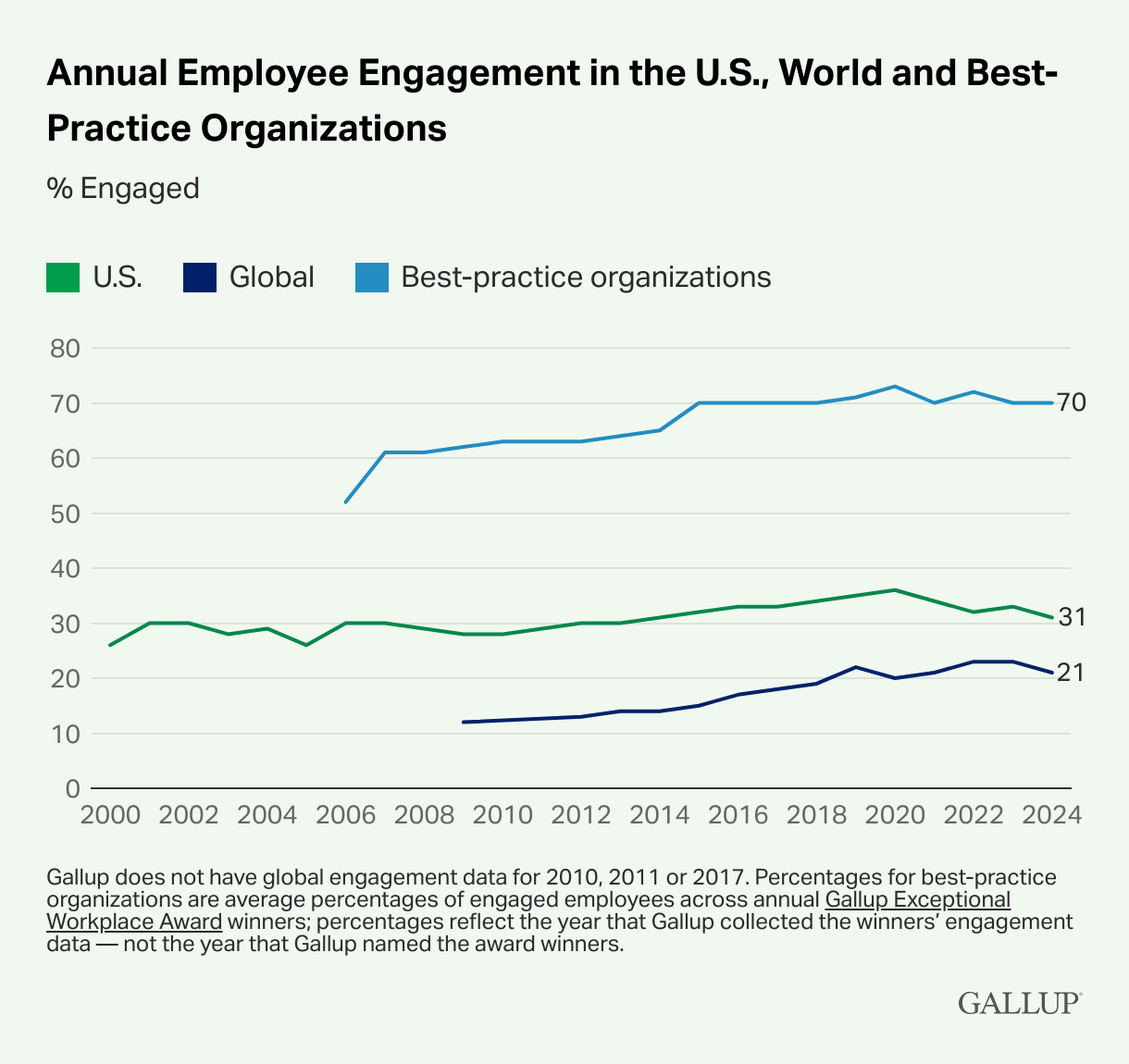
Gallup’s definition of engagement matters. It is “involvement and enthusiasm.” It not perks, and it is not a temporary spike in job satisfaction. Engagement is the human fuel that turns effort into momentum. It is what makes people care about outcomes, not just tasks. So, when engagement is low, it is not only a culture issue; it’s an execution issue. Low engagement often looks like more second-guessing, more rework, more passive resistance, and more “just tell me what to do.” It also looks like fewer hard conversations. The conversations that prevent churn are the ones that start with clarity.
AI can absolutely increase output, but it does not automatically create clarity. It does not repair misaligned incentives, nor does it rebuild trust. It does not reduce pointless meetings, last-minute stakeholder edits, nor does it fix a strategy that changes every two weeks. AI cannot fix bad leadership or the lack of direction that’s communicated for important projects.
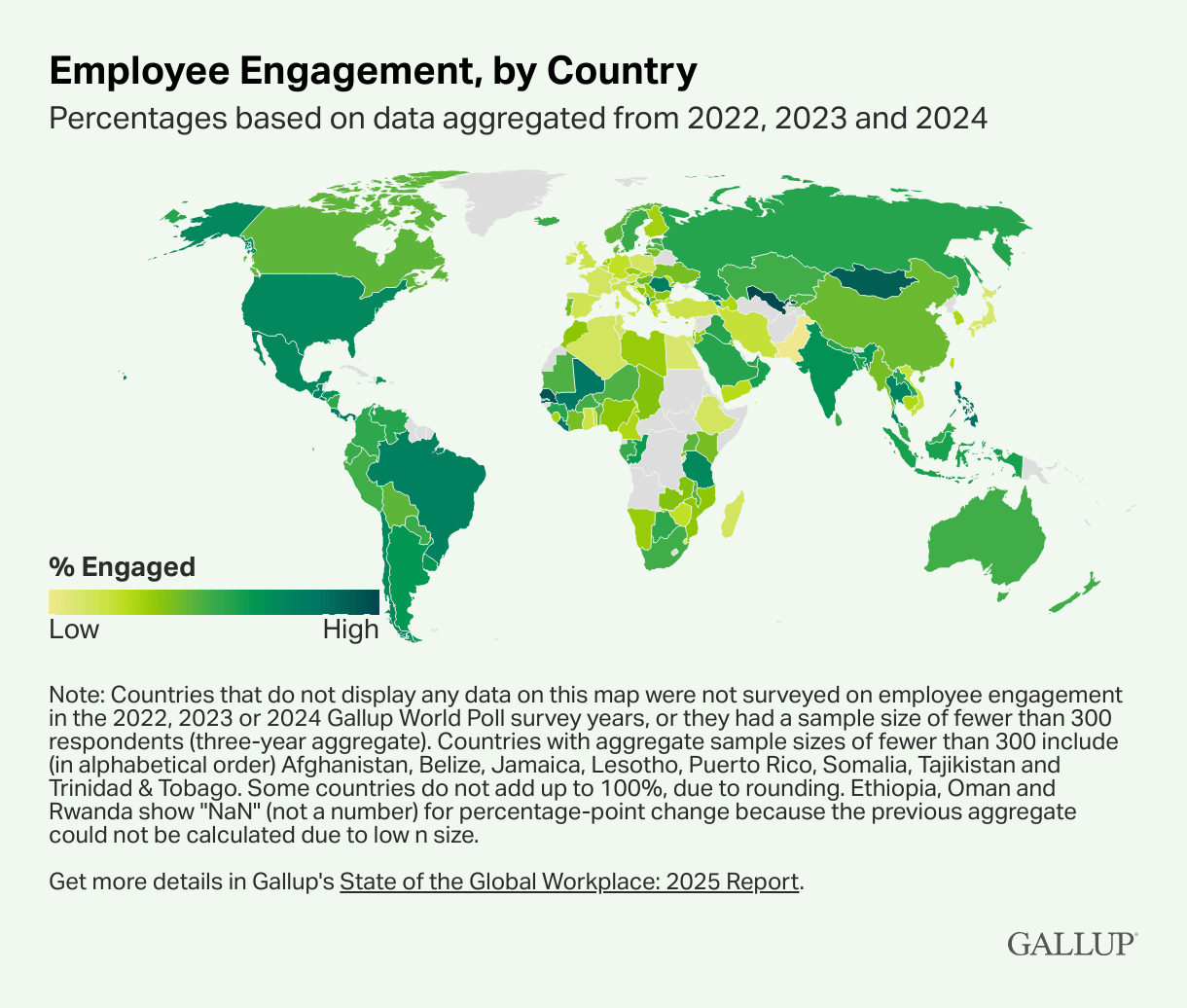
In a low-engagement environment, AI often accelerates activity without increasing alignment. You get more drafts, more artifacts, more options, and more messages. You do not necessarily get more shared direction.
This is how output inflation starts. Not because people are lazy, but because people do not feel safe to slow down and ask the questions that would prevent the churn.
What are we not doing this quarter?
What does “good” look like here?
Who is the real audience, and what do they need?
What decision does this work enable?
When engagement is low, those questions can feel risky, so people cope by proving worth through volume.
2) AI Use Is Rising, but the “Everyone Is Crushing It” Story Is Overstated
Gallup’s AI at work research shows adoption is growing, but it is not universal. In Q3 2025, 45% of employees said they use AI at least a few times a year, while about 10% say they use it daily. That gap matters because it explains the social pressure so many people feel.
The loudest voices in the conversation are often power users. They are posting workflows and “look how fast I shipped this” stories. Meanwhile, a large share of workers are still in a reality where AI access is inconsistent, policies are unclear, training is minimal, and time to experiment does not exist. In some roles, the work is too sensitive to use AI freely.
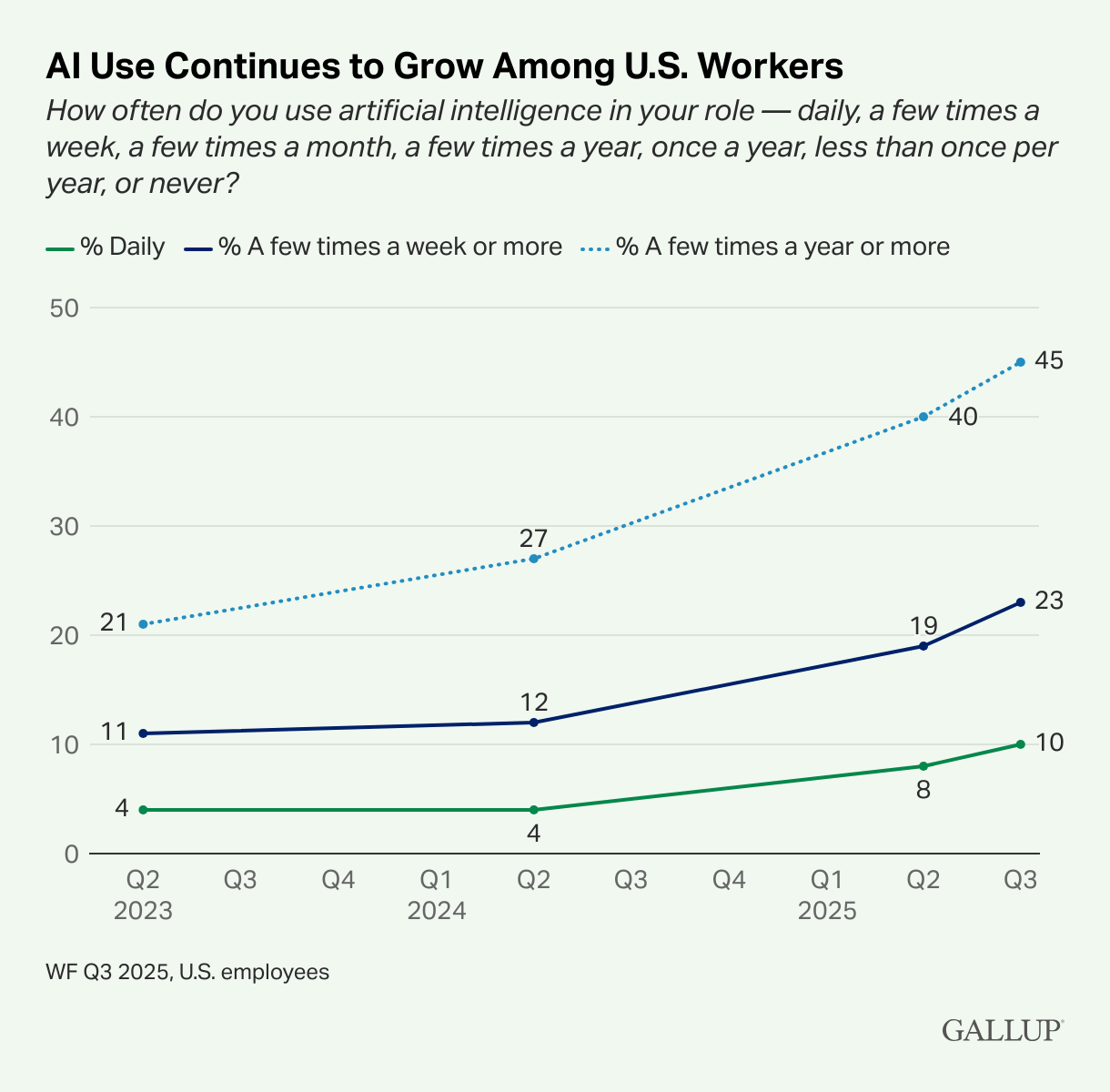
If you are not using AI constantly, it is easy to internalize that as personal failure. But the data suggests it is often structural.
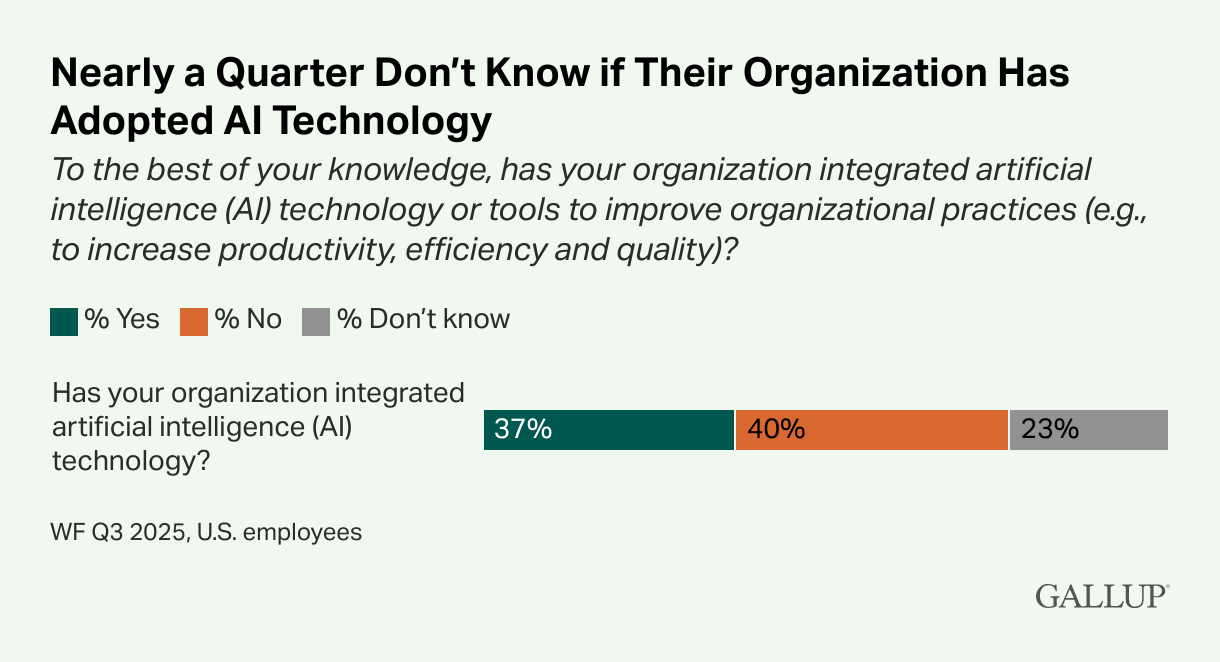
Gallup also points toward why adoption is uneven. Use grows when managers support it and when AI is intentionally integrated into the role rather than bolted on as a vague expectation. In a related Gallup analysis, manager support is tied to whether employees see AI as useful and whether it helps them do what they do best. This is where the productivity narrative becomes dangerous. When leaders communicate productivity expectations without upgrading the infrastructure, AI becomes less like empowerment and more like a silent performance standard.
That is where “do more” turns into fear.
3) Emotional Health Data Explains Why “Just Be More Productive” Starts to Feel Inhuman
Gallup’s global emotional health tracking adds a third dimension. People can be functioning, even performing, and still be emotionally worn down.
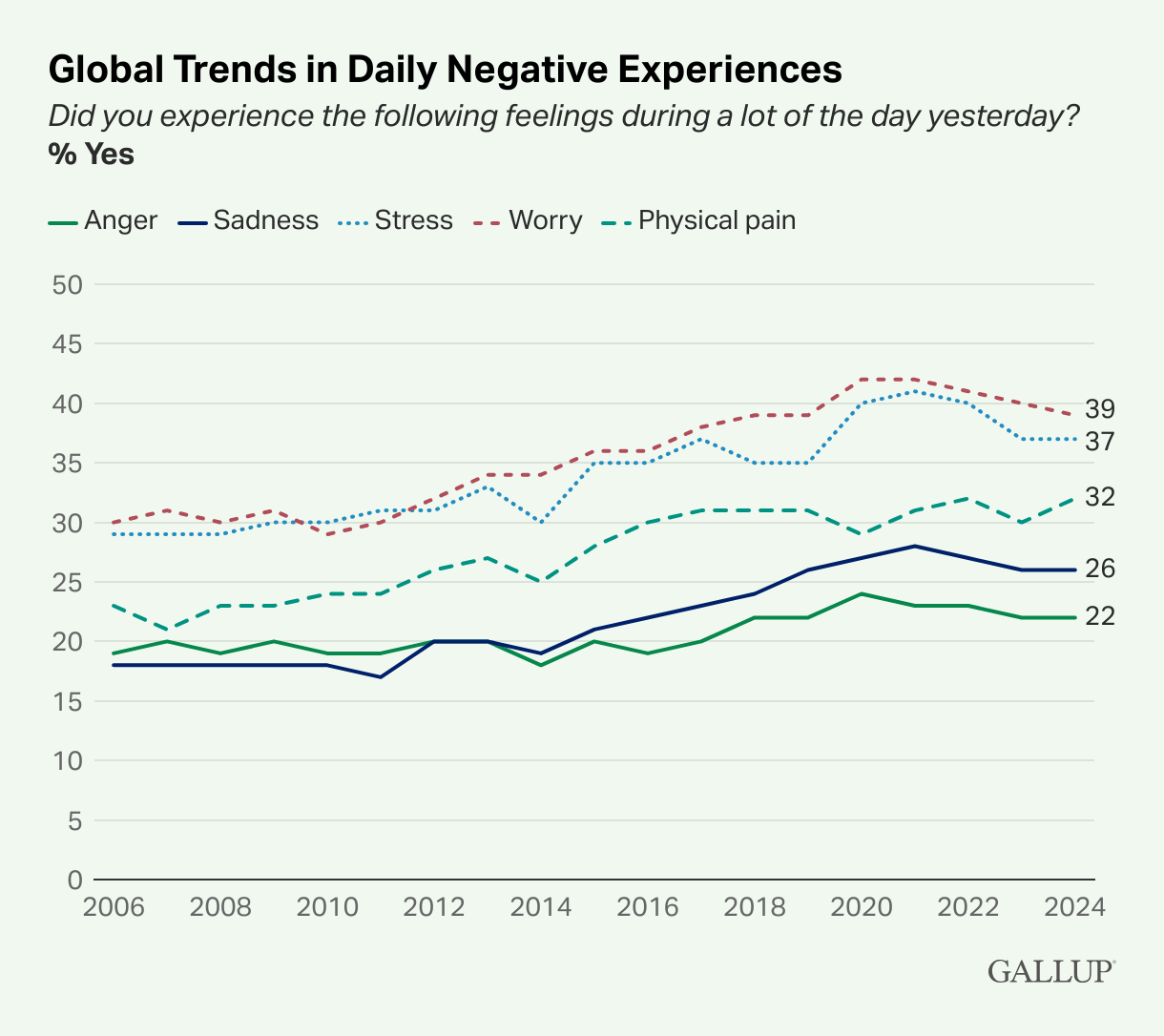
In 2024, Gallup reports 88% of adults worldwide said they were treated with respect. Positive emotions like smiling, laughter, and enjoyment held steady. That is not doom, that is resilience. But the same reporting also shows worry and stress remain elevated. This combination is the nuance many workplace narratives ignore. People can be resilient and still be overloaded.
If your baseline stress is already higher, “be massively productive” does not just feel demanding. It can feel dehumanizing. It narrows attention. It reduces patience. It makes everything feel like survival mode. And when work becomes survival mode, people do not innovate. They protect themselves.
Put these three Gallup threads together, and the picture is clear.
Engagement is low, so the capacity to care is limited.
AI use is real but uneven, so comparison pressure is high.
Emotional strain is elevated even as resilience holds, so capacity is fragile.
So, when organizations blast the same “AI equals more productivity” message to everyone, it lands differently. For some leaders, it is a lever. For many workers, it is a threat. For many mid-career marketers, it becomes an impossible demand to be both faster and more strategic without more time to think.
Blogs, Transcripts, and Show Links
Find more insights like this on the podcast and Enterprising Minds blog!
Four Guardrails to Use AI Without Burning Out
These are small shifts you can try this week. No permission slip required.
1) Cap Output on Purpose
Decide your maximum “shippable” outputs for the week, for example, two drafts, one deck, and one stakeholder update. Everything else goes into a backlog. This is how you prevent AI from turning your week into an endless content buffet.
2) Give AI One Job, Not Five
Pick one role for AI this week.
· Blank-page killer for outlines and first drafts
· Compression tool for summaries and synthesis
· Variation engine for alternate headlines and rewrites
Constraints reduce burnout. You are not trying to become an AI factory. You are trying to protect attention.
3) Add a Thinking Tax After Generating
For every 30 minutes of AI generation, schedule 10 minutes of synthesis.
· What do I actually believe?
· What decision does this enable?
· What is the risk if we ship this?
Output without synthesis creates noise. Synthesis is where strategy lives.
4) Clean Up Your Media Diet, Especially LinkedIn
A lot of content is performance. If you already feel replaceable, it spikes anxiety fast.
For one week, mute anything that makes you feel behind and replace it with fundamentals. Strategy, writing, product thinking, leadership. Your nervous system will notice the difference.
The Hopeful Part
You are not failing because you are not “productive enough.” You are reacting normally to a system that is asking humans to behave like machines. Use AI to buy back what the productivity narrative steals—thinking time, recovery time, and the ability to do fewer things better.
What is one guardrail you could implement this week to protect your attention? An output cap, an AI budget, or a stricter definition of done?
Links to the Gallup Studies:
Share the Love!
If you know anyone who could benefit from this content, please share it!